Microsoft SQL Server Master Data Services (MDS) is a Master Data Management (MDM) product from Microsoft that ships as a part of the Microsoft SQL Server relational database management system. Master data management (MDM) allows an organization to discover and define non-transactional lists of data, and compile maintainable, reliable master lists. Master Data Services first shipped with Microsoft SQL Server 2008 R2. Microsoft SQL Server 2016 introduced enhancements to Master Data Services, such as improved performance and security, and the ability to clear transaction logs, create custom indexes, share entity data between different models, and support for many-to-many relationships. == Overview == In Master Data Services, the model is the highest level container in the structure of your master data. You create a model to manage groups of similar data. A model contains one or more entities, and entities contain members that are the data records. An entity is similar to a table. Like other MDM products, Master Data Services aims to create a centralized data source and keep it synchronized, and thus reduce redundancies, across the applications which process the data. Sharing the architectural core with Stratature +EDM, Master Data Services uses a Microsoft SQL Server database as the physical data store. It is a part of the Master Data Hub, which uses the database to store and manage data entities. It is a database with the software to validate and manage the data, and keep it synchronized with the systems that use the data. The master data hub has to extract the data from the source system, validate, sanitize and shape the data, remove duplicates, and update the hub repositories, as well as synchronize the external sources. The entity schemas, attributes, data hierarchies, validation rules and access control information are specified as metadata to the Master Data Services runtime. Master Data Services does not impose any limitation on the data model. Master Data Services also allows custom Business rules, used for validating and sanitizing the data entering the data hub, to be defined, which is then run against the data matching the specified criteria. All changes made to the data are validated against the rules, and a log of the transaction is stored persistently. Violations are logged separately, and optionally the owner is notified, automatically. All the data entities can be versioned. Master Data Services allows the master data to be categorized by hierarchical relationships, such as employee data are a subtype of organization data. Hierarchies are generated by relating data attributes. Data can be automatically categorized using rules, and the categories are introspected programmatically. Master Data Services can also expose the data as Microsoft SQL Server views, which can be pulled by any SQL-compatible client. It uses a role-based access control system to restrict access to the data. The views are generated dynamically, so they contain the latest data entities in the master hub. It can also push out the data by writing to some external journals. Master Data Services also includes a web-based UI for viewing and managing the data. It uses ASP.NET in the back-end. The Silverlight front-end was replaced with HTML5 in SQL Server 2019. Master Data Services provides a Web service interface to expose the data, as well as an API, which internally uses the exposed web services, exposing the feature set, programmatically, to access and manipulate the data. It also integrates with Active Directory for authentication purposes. Unlike +EDM, Master Data Services supports Unicode characters, as well as support multilingual user interfaces. SQL Server 2016 introduced a significant performance increase in Master Data Services over previous versions. == Terminology == Model is the highest level of an MDS instance. It is the primary container for specific groupings of master data. In many ways it is very similar to the idea of a database. Entities are containers created within a model. Entities provide a home for members, and are in many ways analogous to database tables. (e.g. Customer) Members are analogous to the records in a database table (Entity) e.g. Will Smith. Members are contained within entities. Each member is made up of two or more attributes. Attributes are analogous to the columns within a database table (Entity) e.g. Surname. Attributes exist within entities and help describe members (the records within the table). Name and Code attributes are created by default for each entity and serve to describe and uniquely identify leaf members. Attributes can be related to other attributes from other entities which are called 'domain-based' attributes. This is similar to the concept of a foreign key. Other attributes however, will be of type 'free-form' (most common) or 'file'. Attribute Groups are explicitly defined collections of particular attributes. Say you have an entity "customer" that has 50 attributes — too much information for many of your users. Attribute groups enable the creation of custom sets of hand-picked attributes that are relevant for specific audiences. (e.g. "customer - delivery details" that would include just their name and last known delivery address). This is very similar to a database view. Hierarchies organize members into either Derived or Explicit hierarchical structures. Derived hierarchies, as the name suggests, are derived by the MDS engine based on the relationships that exist between attributes. Explicit hierarchies are created by hand using both leaf and consolidated members. Business Rules can be created and applied against model data to ensure that custom business logic is adhered to. In order to be committed into the system data must pass all business rule validations applied to them. e.g. Within the Customer Entity you may want to create a business rule that ensures all members of the 'Country' Attribute contain either the text "USA" or "Canada". The Business Rule once created and ran will then verify all the data is correct before it accepts it into the approved model. Versions provide system owners / administrators with the ability to Open, Lock or Commit a particular version of a model and the data contained within it at a particular point in time. As the content within a model varies, grows or shrinks over time versions provide a way of managing metadata so that subscribing systems can access to the correct content.
Cyber and Information Domain Service
The Cyber and Information Domain Service (CIDS; German: Cyber- und Informationsraum, lit. 'Cyber and Information space', pronounced [ˈsaɪbɐ ʔʊnt ʔɪnfɔʁmaˈtsi̯oːnsʁaʊm] ; CIR) is the youngest branch of the German Armed Forces, the Bundeswehr. The decision to form an organizational unit was presented by Defense Minister Ursula von der Leyen on 26 April 2016, becoming operational on 1 April 2017. It is headquartered in Bonn. == History == In November 2015, the German Ministry of Defense activated a Staff Group within the ministry tasked with developing plans for a reorganization of the Cyber, IT, military intelligence, geo-information, and operative communication units of the Bundeswehr. On 26 April 2016, Defense Minister Ursula von der Leyen presented the plans for the new military branch to the public and on 5 October 2016 the command's staff became operational as a department within the ministry of defense. On 1 April 2017, the Cyber and Information Domain Service (CIDS) was activated as a "military organizational unit" (Organisationsbereich), indicating its status below a full service branch. The CIDS Headquarters took command of all existing electronic warfare, signals, IT, military intelligence, geoinformation, and psychological operations units. As part of a wider restructuring of higher command in the Bundeswehr in 2024, it was decided to upgrade it from a military organizational unit to the fourth full military service branch, alongside Heer (army), Luftwaffe (air force) and Deutsche Marine (navy). == Organisation == The CIDS is commanded by the Chief of the Cyber and Information Domain Service (Inspekteur des Cyber- und Informationsraum InspCIR), a three-star general position, based in Bonn. As of April 2023, it is structured as follows: Cyber and Information Domain Service Command (Kommando Cyber- und Informationsraum KdoCIR), in Bonn Reconnaissance and Effects Command (Kommando Aufklärung und Wirkung KdoAufkl/Wirk), in Gelsdorf 911th Electronic Warfare Battalion 912th Electronic Warfare Battalion, mans the Oste-class SIGINT/ELINT and reconnaissance ships 931st Electronic Warfare Battalion 932nd Electronic Warfare Battalion, provides airborne troops for operations in enemy territory Cyber-Operations Centre (Zentrum Cyber-Operationen ZSO) Central Imaging Reconnaissance (Zentrale Abbildende Aufklärung ZAbbAufkl), operating the SAR-Lupe satellites Central Bundeswehr Investigation Authority for Technical Reconnaissance (Zentrale Untersuchungsstelle der Bundeswehr für Technische Aufklärung ZU-StelleBwTAufkl) Signals Reconnaissance Centre North (Fernmeldeaufklärungszentrale Nord FmAufklZentr NORD) Signals Reconnaissance Centre South (Fernmeldeaufklärungszentrale Süd FmAufklZentr SÜD) Information Technology Services Command (Kommando Informationstechnik-Services der Bundeswehr KdoIT-SBw), in Bonn 281st Information Technology Battalion 282nd Information Technology Battalion 292nd Information Technology Battalion 293rd Information Technology Battalion 381st Information Technology Battalion 383rd Information Technology Battalion Bundeswehr Geoinformation Centre (Zentrum für Geoinformationswesen der Bundeswehr), in Euskirchen Bundeswehr Cyber-Security Centre (Zentrum für Cyber-Sicherheit der Bundeswehr ZCSBw) Bundeswehr Software Digitalisation Centre (Zentrum Digitalisierung der Bundeswehr und Fähigkeitsentwicklung Cyber- und Informationsraum ZDigBw) Bundeswehr Operational Communications Centre (Zentrum Operative Kommunikation der Bundeswehr ZOpKomBw) Training Centre CIDS (Ausbildungszentrum CIR AusbZ CIR)
Data recovery
In computing, data recovery is a process of retrieving deleted, inaccessible, lost, corrupted, damaged, or overwritten data from secondary storage, removable media or files, when the data stored in them cannot be accessed in a usual way. The data is most often salvaged from storage media such as internal or external hard disk drives (HDDs), solid-state drives (SSDs), USB flash drives, magnetic tapes, CDs, DVDs, RAID subsystems, and other electronic devices. Recovery may be required due to physical damage to the storage devices or logical damage to the file system that prevents it from being mounted by the host operating system (OS). Logical failures occur when the hard drive devices are functional but the user or automated-OS cannot retrieve or access data stored on them. Logical failures can occur due to corruption of the engineering chip, lost partitions, firmware failure, or failures during formatting/re-installation. Data recovery can be a very simple or technical challenge. This is why there are specific software companies specialized in this field that help to get back data on your system. == About == The most common data recovery scenarios involve an operating system failure, malfunction of a storage device, logical failure of storage devices, accidental damage or deletion, etc. (typically, on a single-drive, single-partition, single-OS system), in which case the ultimate goal is simply to copy all important files from the damaged media to another new drive. This can be accomplished using a Live CD, or DVD by booting directly from a ROM or a USB drive instead of the corrupted drive in question. Many Live CDs or DVDs provide a means to mount the system drive and backup drives or removable media, and to move the files from the system drive to the backup media with a file manager or optical disc authoring software. Such cases can often be mitigated by disk partitioning and consistently storing valuable data files (or copies of them) on a different partition from the replaceable OS system files. Another scenario involves a drive-level failure, such as a compromised file system or drive partition, or a hard disk drive failure. In any of these cases, the data is not easily read from the media devices. Depending on the situation, solutions involve repairing the logical file system, partition table, or master boot record, or updating the firmware or drive recovery techniques ranging from software-based recovery of corrupted data, to hardware- and software-based recovery of damaged service areas (also known as the hard disk drive's "firmware"), to hardware replacement on a physically damaged drive which allows for the extraction of data to a new drive. If a drive recovery is necessary, the drive itself has typically failed permanently, and the focus is rather on a one-time recovery, salvaging whatever data can be read. In a third scenario, files have been accidentally "deleted" from a storage medium by the users. Typically, the contents of deleted files are not removed immediately from the physical drive; instead, references to them in the directory structure are removed, and thereafter space the deleted data occupy is made available for later data overwriting. In the mind of end users, deleted files cannot be discoverable through a standard file manager, but the deleted data still technically exists on the physical drive. In the meantime, the original file contents remain, often several disconnected fragments, and may be recoverable if not overwritten by other data files. The term "data recovery" is also used in the context of forensic applications or espionage, where data which have been encrypted, hidden, or deleted, rather than damaged, are recovered. Sometimes data present in the computer gets encrypted or hidden due to reasons like virus attacks which can only be recovered by some computer forensic experts. == Physical damage == A wide variety of failures can cause physical damage to storage media, which may result from human errors and natural disasters. CD-ROMs can have their metallic substrate or dye layer scratched off; hard disks can suffer from a multitude of mechanical failures, such as head crashes, PCB failure, and failed motors; tapes can simply break. Physical damage to a hard drive, even in cases where a head crash has occurred, does not necessarily mean permanent data loss. However, in extreme cases, such as prolonged exposure to moisture and corrosion —like the lost Bitcoin hard drive of James Howells, buried in the Newport landfill for over a decade — recovery is usually impossible. In rare cases, forensic techniques such as magnetic force microscopy (MFM) have been explored to detect residual magnetic traces when data holds exceptional value. Other techniques employed by many professional data recovery companies can typically salvage most, if not all, of the data that had been lost when the failure occurred. Of course, there are exceptions to this, such as cases where severe damage to the hard drive platters may have occurred. However, if the hard drive can be repaired and a full image or clone created, then the logical file structure can be rebuilt in most instances. Most physical damage cannot be repaired by end users. For example, opening a hard disk drive in a normal environment can allow airborne dust to settle on the platter and become caught between the platter and the read/write head. During normal operation, read/write heads float 3 to 6 nanometers above the platter surface, and the average dust particles found in a normal environment are typically around 30,000 nanometers in diameter. When these dust particles get caught between the read/write heads and the platter, they can cause new head crashes that further damage the platter and thus compromise the recovery process. Furthermore, end users generally do not have the hardware or technical expertise required to make these repairs. Consequently, data recovery companies are often employed to salvage important data with the more reputable ones using class 100 dust- and static-free cleanrooms. === Recovery techniques === Recovering data from physically damaged hardware can involve multiple techniques. Some damage can be repaired by replacing parts in the hard disk. This alone may make the disk usable, but there may still be logical damage. A specialized disk-imaging procedure is used to recover every readable bit from the surface. Once this image is acquired and saved on a reliable medium, the image can be safely analyzed for logical damage and will possibly allow much of the original file system to be reconstructed. ==== Hardware repair ==== A common misconception is that a damaged printed circuit board (PCB) may be simply replaced during recovery procedures by an identical PCB from a healthy drive. While this may work in rare circumstances on hard disk drives manufactured before 2003, it will not work on newer drives. Electronics boards of modern drives usually contain drive-specific adaptation data (generally a map of bad sectors and tuning parameters) and other information required to properly access data on the drive. Replacement boards often need this information to effectively recover all of the data. The replacement board may need to be reprogrammed. Some manufacturers (Seagate, for example) store this information on a serial EEPROM chip, which can be removed and transferred to the replacement board. Each hard disk drive has what is called a system area or service area; this portion of the drive, which is not directly accessible to the end user, usually contains drive's firmware and adaptive data that helps the drive operate within normal parameters. One function of the system area is to log defective sectors within the drive; essentially telling the drive where it can and cannot write data. The sector lists are also stored on various chips attached to the PCB, and they are unique to each hard disk drive. If the data on the PCB do not match what is stored on the platter, then the drive will not calibrate properly. In most cases the drive heads will click because they are unable to find the data matching what is stored on the PCB. == Logical damage == The term "logical damage" refers to situations in which the error is not a problem in the hardware and requires software-level solutions. === Corrupt partitions and file systems, media errors === In some cases, data on a hard disk drive can be unreadable due to damage to the partition table or file system, or to (intermittent) media errors. In the majority of these cases, at least a portion of the original data can be recovered by repairing the damaged partition table or file system using specialized data recovery software such as TestDisk; software like ddrescue can image media despite intermittent errors, and image raw data when there is partition table or file system damage. This type of data recovery can be performed by people without expertise in drive hardware as it requires no special physica
Content repository
A content repository or content store is a database of digital content with an associated set of data management, search and access methods allowing application-independent access to the content, rather like a digital library, but with the ability to store and modify content in addition to searching and retrieving. The content repository acts as the storage engine for a larger application such as a content management system or a document management system, which adds a user interface on top of the repository's application programming interface. == Advantages provided by repositories == Common rules for data access allow many applications to work with the same content without interrupting the data. They give out signals when changes happen, letting other applications using the repository know that something has been modified, which enables collaborative data management. Developers can deal with data using programs that are more compatible with the desktop programming environment. The data model is scriptable when users use a content repository. == Content repository features == A content repository may provide functionality such as: Add/edit/delete content Hierarchy and sort order management Query / search Versioning Access control Import / export Locking Life-cycle management Retention and holding / records management == Examples == Apache Jackrabbit ModeShape == Applications == Content management Document management Digital asset management Records management Revision control Social collaboration Web content management == Standards and specification == Content repository API for Java WebDAV Content Management Interoperability Services
Conjugate coding
Conjugate coding is a cryptographic tool, introduced by Stephen Wiesner in the late 1960s. It is part of the two applications Wiesner described for quantum coding, along with a method for creating fraud-proof banking notes. The application that the concept was based on was a method of transmitting multiple messages in such a way that reading one destroys the others. This is called quantum multiplexing and it uses photons polarized in conjugate bases as "qubits" to pass information. Conjugate coding also is a simple extension of a random number generator. At the behest of Charles Bennett, Wiesner published the manuscript explaining the basic idea of conjugate coding with a number of examples but it was not embraced because it was significantly ahead of its time. Because its publication has been rejected, it was developed to the world of public-key cryptography in the 1980s as oblivious transfer, first by Michael Rabin and then by Shimon Even. It is used in the field of quantum computing. The initial concept of quantum cryptography developed by Bennett and Gilles Brassard was also based on this concept.
Wetware (brain)
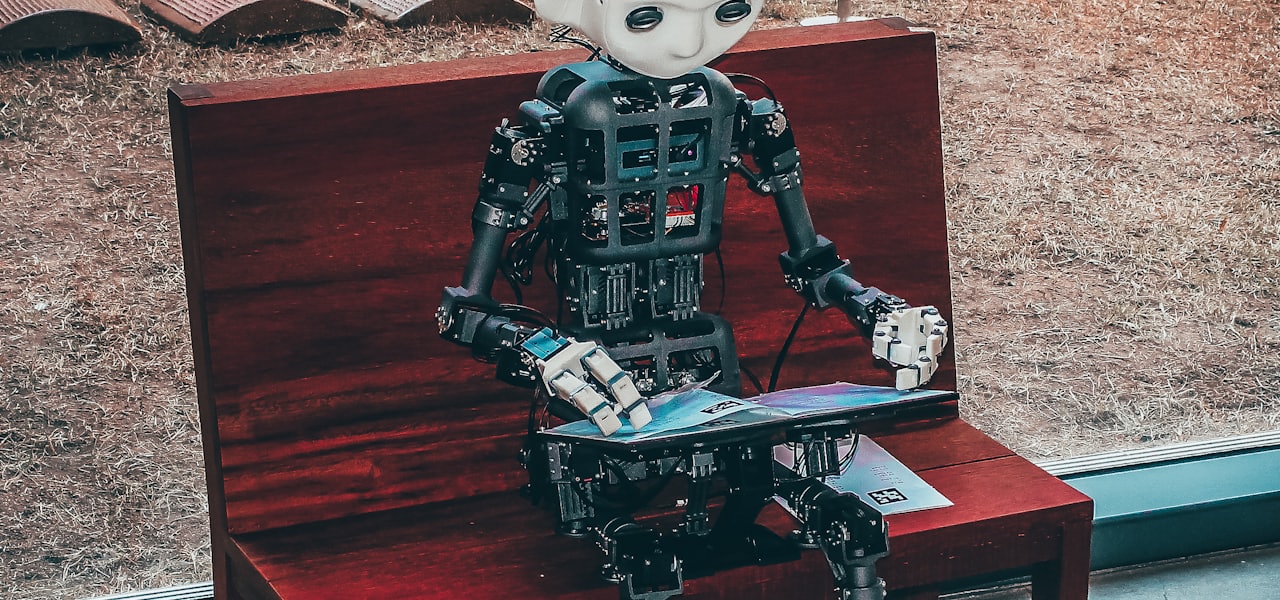
Wetware is a term drawn from the computer-related idea of hardware or software, but applied to biological life forms. == Usage == The prefix "wet" is a reference to the water found in living creatures. Wetware is used to describe the elements equivalent to hardware and software found in a person, especially the central nervous system (CNS) and the human mind. The term wetware finds use in works of fiction, in scholarly publications and in popularizations. The "hardware" component of wetware concerns the bioelectric and biochemical properties of the CNS, specifically the brain. If the sequence of impulses traveling across the various neurons are thought of symbolically as software, then the physical neurons would be the hardware. The amalgamated interaction of this software and hardware is manifested through continuously changing physical connections, and chemical and electrical influences that spread across the body. The process by which the mind and brain interact to produce the collection of experiences that we define as self-awareness is in question. == History == Although the exact definition has shifted over time, the term Wetware and its fundamental reference to "the physical mind" has been around at least since the mid-1950s. Mostly used in relatively obscure articles and papers, it was not until the heyday of cyberpunk, however, that the term found broad adoption. Among the first uses of the term in popular culture was the Bruce Sterling novel Schismatrix (1985) and the Michael Swanwick novel Vacuum Flowers (1987). Rudy Rucker references the term in a number of books, including one entitled Wetware (1988): ... all sparks and tastes and tangles, all its stimulus/response patterns – the whole bio-cybernetic software of mind. Rucker did not use the word to simply mean a brain, nor in the human-resources sense of employees. He used wetware to stand for the data found in any biological system, analogous perhaps to the firmware that is found in a ROM chip. In Rucker's sense, a seed, a plant graft, an embryo, or a biological virus are all wetware. DNA, the immune system, and the evolved neural architecture of the brain are further examples of wetware in this sense. Rucker describes his conception in a 1992 compendium The Mondo 2000 User's Guide to the New Edge, which he quotes in a 2007 blog entry. Early cyber-guru Arthur Kroker used the term in his blog. With the term getting traction in trendsetting publications, it became a buzzword in the early 1990s. In 1991, Dutch media theorist Geert Lovink organized the Wetware Convention in Amsterdam, which was supposed to be an antidote to the "out-of-body" experiments conducted in high-tech laboratories, such as experiments in virtual reality. Timothy Leary, in an appendix to Info-Psychology originally written in 1975–76 and published in 1989, used the term wetware, writing that "psychedelic neuro-transmitters were the hot new technology for booting-up the 'wetware' of the brain". Another common reference is: "Wetware has 7 plus or minus 2 temporary registers." The numerical allusion is to a classic 1957 article by George A. Miller, The magical number 7 plus or minus two: some limits in our capacity for processing information, which later gave way to Miller's law.
G.9972
G.9972 (also known as G.cx) is a Recommendation developed by ITU-T that specifies a coexistence mechanism for networking transceivers capable of operating over electrical power line wiring. It allows G.hn devices to coexist with other devices implementing G.9972 and operating on the same power line wiring. G.9972 received consent during the meeting of ITU-T Study Group 15, on October 9, 2009, and final approval on June 11, 2010. G.9972 specifies two mechanisms for coexistence between G.hn home networks and broadband over power lines (BPL) Internet access networks: Frequency-division multiplexing (FDM), in which the available spectrum is divided into two parts: frequencies below 10 or 14 MHz (specific value can be selected by the access network) are reserved for the access network, while frequencies above them are reserved for the in-home network. Time-division multiplexing (TDM), in which the available channel time is split equally between both networks. 50% of time slots are allocated for the access network, and 50% are allocated to the in-home network.